
Summer brings its vibrant and sunny energy, and for many of us, it’s the time to get outdoors and engage in active pursuits. Of course, one of the most popular forms of physical activity is running. But what should you do when the summer weather reaches its peak and the sun relentlessly scorches the earth? It turns out that running in the heat is not only possible but also has its unique advantages!
Running in the heat is a challenging endeavour that requires a special approach and caution. Nevertheless, many athletes and fitness enthusiasts choose this weather for their workouts. Why run in the heat when you can simply opt for cooler times or an air-conditioned gym? The answer to this question lies in the unique significance and benefits of running in high temperatures.
The first and perhaps most important advantage of running in the heat is the challenge it poses to your body. When we run under the scorching sun and encounter elevated temperatures, our bodies are forced to operate at the limits of their capabilities. This promotes the activation of numerous physiological processes that not only improve your physical fitness, but also strengthen the immune system.
Moreover, running in the heat promotes intensive sweating, which helps the body eliminate toxins and waste. It also enhances the functioning of the thermoregulatory system, training it at a higher level. And of course, running in the heat allows you to train at a more intense level, which contributes to increased endurance and improved performance.
However, before heading out for a run under the blazing sun, it’s essential to realize and understand how to approach this challenge and consider your abilities. In this article, we will share the benefits and dangers of running in the heat, as well as provide valuable tips to help you enjoy your runs and achieve your fitness goals during the hot summer days.
Don’t miss the opportunity to embrace this trial by fire and experience how running in the heat transforms your physical fitness and provides new sensations!
Benefits of Running in the Heat
Running in the heat is an excellent way not only to strengthen your body but also to undergo a real trial by fire that will help you develop various aspects of physical and psychological preparedness. Let’s explore the advantages of running in the heat and how they can assist you on your journey to health, endurance, and personal growth. Are you ready to accept the challenge? Let’s get started!
Physiological Benefits
Running in the heat has a positive impact on the physiological processes of the body. The increased temperature leads to intense sweating, aiding in the elimination of toxins and waste from the body. This, in turn, helps improve overall health and reduces the risk of various illnesses.
Boosts Immune System
Running in the heat stimulates the immune system. In high-temperature conditions, the body activates its defense mechanisms, strengthening immunity. Regular workouts in the heat can help your body become more resilient to infections and diseases.
Enhances Endurance
Running in the heat requires significant effort from the body, which promotes the development of endurance. Training under elevated temperatures pushes the heart and lungs to their limits, strengthening the cardiovascular system. As a result, your endurance improves, enabling you to tackle longer and more intense workouts.
Adaptation to Extreme Conditions
Running in the heat trains your body to adapt to extreme conditions. The elevated temperature challenges the body’s thermoregulatory system, improving its ability to cool down and maintain optimal body temperature. This can be useful in situations where you have to cope with hot weather or other high-temperature conditions.
Overcoming Laziness and Stepping Out of the Comfort Zone
Running in the heat requires willpower and the ability to overcome difficulties. Training in extreme conditions helps develop psychological resilience, teaching you to cope with discomfort and push yourself. This is an important skill not only for running but also for life in general.
Running in the heat is not just a physical challenge; it’s a unique opportunity to improve your health, develop endurance, and surpass yourself. In the following sections, we will discuss how to handle the dangers of running in the heat and provide tips for safe and effective workouts.
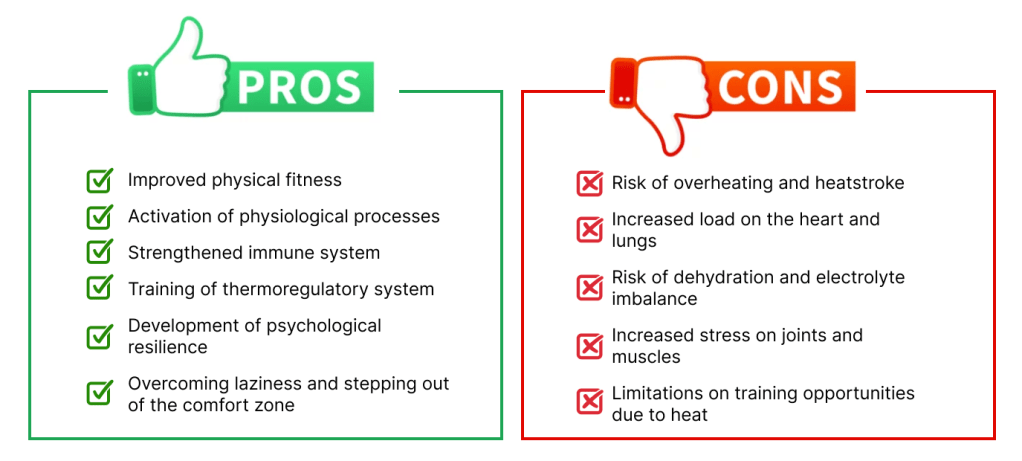
Pros and Cons of Running in the Heat
Dangers of Running in the Heat
Running in hot summer days can be enjoyable and beneficial, but it’s important to understand that there are certain dangers associated with training in high temperatures. In this section, we will discuss the main hazards and precautions that will help you maintain your health and safety while running in the heat.
- Risk of overheating and heatstroke
High temperatures can place increased thermal stress on the body, leading to overheating and heatstroke, which pose a serious threat to health. Signs of overheating may include dizziness, extreme fatigue, cramps, and even loss of consciousness. - Increased load on the heart and lungs
Running in the heat adds an extra burden on the heart and lungs. The body has to manage the dual tasks of maintaining temperature balance and supplying oxygen to organs and tissues, which can result in an elevated heart rate, decreased endurance, and an increased risk of cardiovascular problems. - Risk of dehydration and electrolyte imbalance
When running in the heat, the body actively loses water through sweat to cool down. However, if the fluid loss is not replenished, there is a risk of dehydration. Additionally, electrolytes such as sodium and potassium are lost through sweat, and their deficiency can lead to an electrolyte imbalance, causing muscle cramps, weakness, and other issues. - Increased stress on joints and muscles
Muscles and joints are more prone to strain and injury under high-temperature conditions. Heat can amplify inflammatory processes and increase the risk of strains, sprains, or other injuries.
To minimize risks and ensure safety while running in the heat, it’s important to take a few precautions. Gradually acclimate to training in the heat, avoid direct sunlight during peak hours, wear lightweight and breathable clothing, remember to hydrate regularly during workouts, and listen to your body, stopping promptly if any unusual symptoms occur.
Tips for Safe Running in the Heat
Choose the right time
Avoid exercising during the hottest hours of the day. Preferably, run in the early morning or late evening when the temperature is lower, and the sun is less intense.
Monitor Weather Conditions
Check the weather forecast before your run. Avoid training in extreme weather conditions such as extreme heat, high humidity, or air quality warnings.
Choosing the Right Gear
Use lightweight and breathable clothing that wicks away moisture and allows your skin to breathe. Wear sports hats or bandanas to protect your head from the sun.
Stay Hydrated
Hydration plays a crucial role when running in the heat. Drink an adequate amount of water before, during, and after your workout. Regular hydration will help prevent dehydration.
Avoid Excessive Exertion
Running in hot weather can be more challenging due to increased humidity and heat stress on the body. Adjust your pace accordingly and pay attention to your perceived exertion. It’s important to listen to your body and not push yourself too hard. Gradually build your endurance and acclimate to the heat.
Planning Your Route
When running in the heat, it’s essential to carefully plan your route. Choose shady paths, parks, or routes with ample tree coverage to protect yourself from direct sunlight. Additionally, select routes with water fountains or hydration stations to ensure access to fluids during your run.
Listen to Your Body
Be attentive to signals from your body. If you experience severe fatigue, dizziness, nausea, or any other unusual symptoms, stop immediately and rest.
Protecting Your Skin
Apply sunscreen to exposed areas of skin to prevent sunburns and related issues.
Take Care of Your Joints and Muscles
Keep in mind that running in the heat places extra stress on your joints and muscles. Gradually increase your workload, and don’t forget to stretch and warm up properly.
Pay Attention to Your Nutrition
Consume nutritious foods rich in energy and electrolytes to maintain your energy levels and replenish minerals lost during workouts.
By following these tips, you can safely enjoy running in the heat and derive maximum benefits from your workouts. However, remember to listen to your body and consult a doctor if needed.

Running in the Heat: What You Need to Know
Pre-run Preparation
Before heading out for your run in the heat, take a few minutes to prepare your body. Start with a light muscle stretching routine to improve flexibility and reduce the risk of injuries. Additionally, ensure you have enough fuel by having a light lunch or snack containing carbohydrates to sustain your energy levels.
During Your Run
While running in the heat, it is crucial to pay attention to your body’s signals and adjust your pace accordingly. Take regular walking breaks, especially in hot conditions. Drink fluids at regular intervals to prevent dehydration and maintain electrolyte balance. Whenever possible, run near water sources or carry a water bottle to stay hydrated as needed.
Post-run Recovery
After your run, prioritize your recovery to help your body replenish lost fluids and reduce muscle soreness. Continue to drink fluids and consume carbohydrates and proteins. Take a cool shower to lower your body temperature and alleviate discomfort. Stretching your muscles post-run will also aid in recovery and prevent tightness.
How to Stay Motivated for Running in the Heat
Maintaining motivation for running in the heat can be challenging, but here are a few tips to help you stay on track:
- Set realistic goals and remind yourself of the benefits of running in hot weather, such as increased endurance and psychological resilience.
- Find a running buddy or join a local running group to keep motivation high and hold each other accountable.
- Incorporate a refreshing post-run routine that includes cooling down, rehydrating, and rewarding yourself for completing the run.
FAQ
Why is running in the heat challenging?
Running in the heat becomes challenging due to several factors. Firstly, high temperatures and humidity create conditions for rapid fluid loss and potential overheating of the body, leading to fatigue, weakness, and difficulty breathing. Secondly, the heat requires the body to exert extra effort for cooling, which can increase strain on the heart and muscles. Additionally, hot climates can affect metabolic processes and reduce overall physical endurance. These factors combine to make running in the heat more demanding and requiring greater effort compared to running in cooler conditions.
Do you burn more calories running in the heat?
Calorie burning during running depends on several factors, including workout intensity, duration, and metabolic activity. Running in the heat may result in increased water and electrolyte loss, which can temporarily reduce body weight. However, this does not necessarily mean that you burn more calories compared to running in cooler conditions.
Weight loss during heat training is primarily associated with fluid loss and the body’s need to cool down. When the body sweats, it loses water and may temporarily reduce weight. However, after rehydration and restoring hydration levels, the lost weight will be regained.
Regarding calorie burning, the main factor is the intensity of the workout. Running in the heat can be more challenging and require greater effort, leading to increased energy expenditure. However, this also depends on individual factors and the body’s response to heat.
Does running in the heat make you faster?
Running in the heat itself does not make you faster. However, training in the heat can contribute to improved endurance and psychological resilience, which ultimately may impact your ability to run at higher speeds.
Does running in the heat improve fitness?
Running in the heat can contribute to improved fitness, especially in terms of endurance and adaptation to extreme conditions. However, it is essential to consider safety measures and precautions when training in the heat.
Should I wear a hat when running in the heat?
Wearing a hat when running in the heat is not mandatory, but can be beneficial. A hat can protect your head from direct sunlight and prevent overheating. Additionally, it can absorb sweat and help maintain optimal body temperature. The decision to wear a hat depends on individual preferences and comfort.
What to Do If You Feel Dizzy or Nauseous While Running in the Heat
Feeling dizzy or nauseous during a run in hot weather can be a sign of heat exhaustion or heat stroke. It is important to immediately stop running and seek shade or air conditioning. Drink cool water or a sports drink, and if the symptoms persist or worsen, seek medical assistance promptly.
Conclusion
Running in the heat can be a challenge, but with proper preparation and adherence to safety measures, it can bring you numerous benefits. The physical and psychological advantages, improved endurance, and adaptation to extreme conditions make running in the heat an exciting and beneficial activity for those seeking new challenges and aiming to improve their fitness.
However, it is crucial to prioritize safety at all times. Remember that every body is unique, so it’s important to listen to your body, not exceed your capabilities, and gradually adapt to running in the heat. Start with shorter workouts and gradually increase the intensity and duration.
Running in the heat is not only a way to enhance your fitness but also a test of your willpower and perseverance. Be prepared for the challenge, approach it with wisdom and caution, and enjoy all the benefits it can bring to you and your running. Wishing you successful training sessions and enjoyable runs in hot weather!
 RunSpirit
Leave a comment