
Hello fellow runners! Staying hydrated is very important for us to achieve our best performance and feel great. When we run, our bodies need enough fluids to maintain balance, keep us cool, and support our muscles. In this guide, we’ll go over some great hacks for hydration. We’ll cover everything from why hydration is important to simple tips and expert advice. By the end of this article, you’ll have all the knowledge and tools you need to improve your running performance. So, let’s get started and discover the best hydration tips for runners!
The Significance of Hydration
Proper hydration levels have a direct impact on the performance, endurance and overall health of athletes. During running, the body loses fluid through sweat and rapid breathing. Failure to replenish enough fluids can lead to dehydration, negatively impacting running performance. Dehydration can cause:
– muscle cramps,
– fatigue,
– cognitive decline,
– and even more serious complications.
By maintaining proper hydration, you can ensure optimal performance and reduce the risk of problems associated with dehydration.
Dehydration can impair running performance. Studies have shown that even mild dehydration (2-3%) can lead to a decrease in running performance. This is because dehydration can lead to a decrease in blood volume, which can reduce the amount of oxygen that is delivered to the muscles.
Isotonic drinks are a popular choice among runners and athletes for hydration. These drinks are similar to our body fluids in terms of dissolved particle concentration, which allows them to be absorbed quickly and replenish fluid loss during intense workouts. Learn more about isotonic drinks here.
How much fluid should runners consume?
Runners need to drink plenty of fluids before, during and after exercise. The exact amount of fluid depends on body weight, duration of running, fitness level, weather conditions and individual sweating rate.
The amount of water that runners need to drink depends on a number of factors, including the intensity and duration of their run, the environmental conditions, and their individual sweat rate. In general, runners should aim to drink 5–7 millilitres of water per kilogram of body weight per hour during exercise.
Hydration and Performance
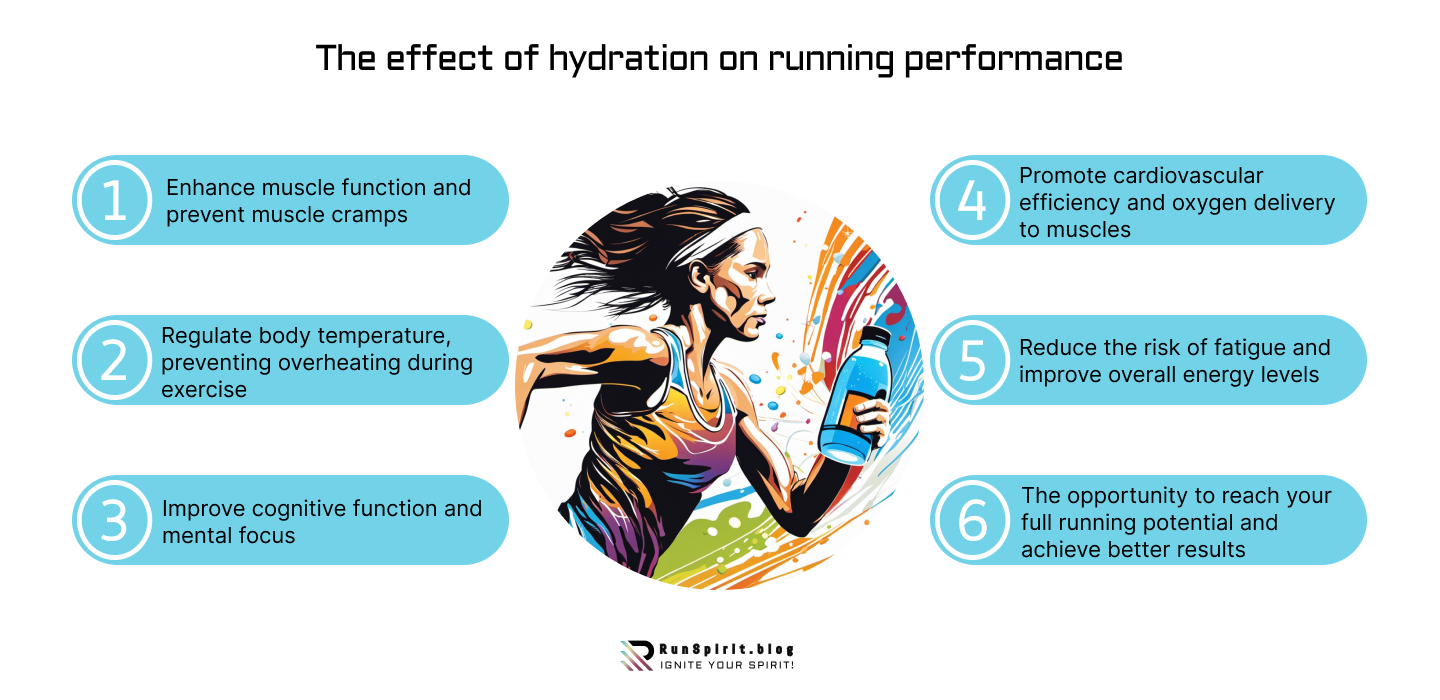
Hydration plays a significant role in optimizing performance and endurance during running. Proper hydration can:
Pre-Run Hydration Strategies
Proper hydration should start even before you begin your run. Consider the following strategies to ensure you are well-hydrated before hitting the pavement:
- Start your day with a glass of water: Begin your morning routine by drinking a glass of water to kickstart hydration.
- Monitor urine colour: Check the colour of your urine throughout the day. If it’s pale yellow or clear, it indicates proper hydration.
- Eating hydrating foods: eat water-rich foods such as fruits and vegetables as snacks and before running.
- Do not abuse caffeine and alcohol: they can have a diuretic effect, leading to increased urine output and possible dehydration.
- Pre-run hydration ritual: Consume 500–600 millilitres of fluid 2–3 hours before your run. This allows ample time for hydration and prevents discomfort during exercise.

Hydration During Your Run
Proper hydration during your run is crucial to maintain performance and prevent dehydration. Consider these hydration hacks to stay fuelled and hydrated while on the move:
- Carry a handheld water bottle: Invest in a handheld water bottle that you can comfortably hold during your run for quick and easy access to hydration.
- Utilize a hydration belt or pack: If you prefer a hands-free option, a hydration belt or pack with built-in water bottles or hydration bladders can be a convenient choice.
- Plan water stops: If running longer distances, plan your route near water fountains or carry a refillable bottle to replenish your fluids.
- Sports drinks for longer runs: For runs lasting longer than an hour, consider incorporating sports drinks containing electrolytes to replenish minerals lost through sweat.
- Drink slowly: During your run, drink water or sports drinks in small, frequent sips to avoid discomfort and minimize the risk of side stitches.
Post-Run Hydration Techniques
Proper hydration after running is an important part of recovery and replenishing lost fluids after a workout. Follow these tips to optimize hydration after running:
- Drink fluids right after your run: Try to have some fluids within 30 minutes after you finish running to start rehydrating your body.
- Replace electrolytes: Think about having drinks or snacks that contain electrolytes to replenish the minerals lost through sweating.
- Opt for a recovery drink: Choose a post-workout recovery drink that combines carbohydrates and protein for optimal muscle recovery and hydration.
- Monitor urine colour post-run: Continue monitoring your urine colour after your run to ensure you are adequately hydrated.
- Rehydrate gradually: Rather than consuming large quantities of fluids all at once, gradually sip water or sports drinks over the next few hours.
Electrolytes: Essential Minerals
Electrolytes are vital minerals that play a crucial role in maintaining proper hydration and supporting various bodily functions. When you sweat, you lose electrolytes along with fluids. Here are some key electrolytes and their functions:
- Sodium: Regulates fluid balance, muscle function, and nerve impulses.
- Potassium: Helps maintain proper muscle function and regulates heart rhythm.
- Magnesium: Supports energy production and muscle relaxation.
- Calcium: Essential for muscle contraction and bone health.
Ensure you replenish these electrolytes through a balanced diet or with the help of electrolyte-rich sports drinks or supplements.
Hydration Gear and Accessories
Investing in the right hydration gear and accessories can enhance your running experience and ensure you have easy access to fluids. Consider the following options:
- Hydration vests or backpacks: Ideal for long-distance runners, these allow you to carry larger volumes of fluids and other essentials.
- Running belts and waist packs: Suitable for shorter runs, these offer storage space for small water bottles and other necessities.
- Hydration reservoirs and bladders: These can be integrated into backpacks or vests, allowing you to carry larger amounts of water without the need for multiple bottles.
- Insulated water bottles: Choose water bottles with insulation to keep your fluids at the desired temperature, especially during hot weather.
- Hydration-compatible apparel: Some running gear features built-in hydration systems, such as vests with hydration bladder compartments.
How does hydration contribute to injury prevention?
Hydration helps keep our joints healthy and reduces the risk of joint-related injuries. It also keeps our muscles flexible, so they’re less likely to get strained or torn. Plus, it helps our tendons stay healthy and prevents overuse injuries. When we drink enough fluids with the right balance of electrolytes, it stops us from getting muscle cramps and imbalances that can lead to injury. By making hydration a priority, runners can improve their overall well-being and lower the chances of injuries that might affect their performance.
Conclusion
Hydration is a fundamental aspect of running that significantly influences performance, endurance, and overall well-being. By incorporating the hydration hacks discussed in this article, you can propel your performance forward and achieve your running goals. Remember to prioritize hydration before, during, and after your runs, monitor your fluid intake, and listen to your body’s cues. Stay hydrated and enjoy the rewards of a well-hydrated and energized running experience!
 RunSpirit
Leave a comment